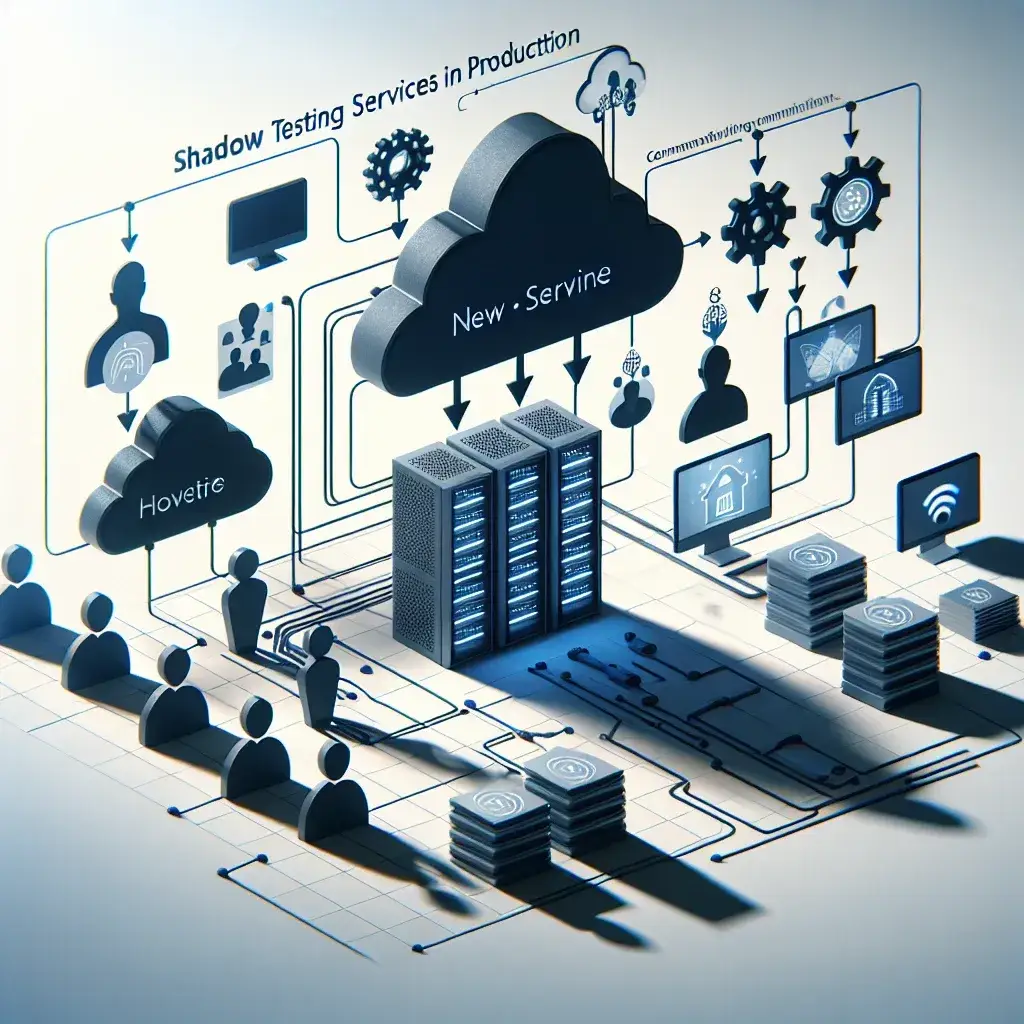
Understanding Shadow Testing in Modern Software Development
Shadow testing represents a revolutionary approach to validating new services in production environments without impacting end users. This sophisticated testing methodology allows development teams to mirror real production traffic to new service versions, enabling comprehensive evaluation while maintaining system stability. As organizations increasingly adopt continuous deployment practices, shadow testing has become an indispensable component of modern DevOps workflows.
The concept operates on the principle of duplicating production traffic to both the existing stable service and the new candidate version simultaneously. While users interact only with the proven stable version, the shadow environment processes identical requests, providing invaluable insights into performance, behavior, and potential issues before full deployment.
Why Shadow Testing Matters for Production Deployments
Traditional testing environments, despite their sophistication, cannot fully replicate the complexity and unpredictability of production systems. Real-world traffic patterns, data volumes, and user behaviors often reveal issues that remain hidden during conventional testing phases. Shadow testing bridges this gap by exposing new services to authentic production conditions while maintaining a safety net.
The benefits extend beyond mere bug detection. Organizations gain confidence in their deployment strategies, reduce rollback incidents, and minimize the risk of customer-facing failures. This approach particularly benefits microservices architectures, where service interdependencies create complex interaction patterns difficult to simulate in isolated testing environments.
Essential Features to Consider in Shadow Testing Tools
When evaluating shadow testing solutions, several critical capabilities distinguish exceptional tools from basic offerings. Traffic mirroring accuracy stands as the foundation, ensuring that duplicated requests maintain identical characteristics to original traffic without introducing artificial delays or modifications.
Real-time monitoring and analytics provide immediate feedback on service performance, enabling rapid identification of anomalies or degradation patterns. Advanced tools offer comprehensive dashboards displaying response times, error rates, resource utilization, and custom metrics relevant to specific business logic.
Intelligent traffic filtering and sampling capabilities allow teams to focus shadow testing on specific user segments, request types, or traffic volumes. This granular control proves essential for managing resource consumption while maintaining testing effectiveness.
Integration and Deployment Considerations
Seamless integration with existing CI/CD pipelines ensures that shadow testing becomes an automated component of the deployment process rather than a manual overhead. Look for tools that support popular orchestration platforms like Kubernetes, Docker Swarm, or cloud-native solutions.
Configuration flexibility enables teams to adapt shadow testing to diverse architectural patterns, from monolithic applications to complex microservices ecosystems. The best tools provide both declarative configuration options and programmatic APIs for dynamic testing scenarios.
Leading Shadow Testing Tools and Platforms
Istio Service Mesh
Istio emerges as a powerful solution for organizations already leveraging service mesh architectures. Its traffic management capabilities enable sophisticated shadow testing scenarios through virtual services and destination rules. The platform excels in microservices environments, providing fine-grained control over traffic routing and comprehensive observability features.
Istio’s strength lies in its native integration with Kubernetes and support for advanced deployment patterns like canary releases and A/B testing. The learning curve can be steep, but the investment pays dividends in large-scale distributed systems where traffic management complexity demands robust solutions.
Linkerd Service Mesh
Linkerd offers a lighter-weight alternative to Istio while maintaining essential shadow testing capabilities. Its focus on simplicity and performance makes it attractive for teams seeking service mesh benefits without operational complexity. The platform provides automatic traffic splitting, comprehensive metrics collection, and seamless integration with popular monitoring solutions.
The tool particularly shines in environments where operational overhead concerns outweigh the need for extensive configuration options. Linkerd’s opinionated approach reduces decision fatigue while delivering reliable shadow testing functionality.
Envoy Proxy
As the foundation underlying many service mesh solutions, Envoy Proxy provides direct control over traffic management and shadow testing implementation. Organizations with specific requirements or existing proxy infrastructure often choose Envoy for its flexibility and performance characteristics.
Envoy’s configuration-driven approach enables precise control over shadow traffic routing, rate limiting, and observability. While requiring more manual setup compared to higher-level solutions, it offers unparalleled customization opportunities for unique architectural requirements.
AWS App Mesh
Amazon’s managed service mesh solution simplifies shadow testing for organizations heavily invested in AWS infrastructure. App Mesh abstracts much of the complexity associated with service mesh deployment while providing robust traffic management capabilities.
The platform integrates seamlessly with other AWS services, enabling comprehensive monitoring through CloudWatch and distributed tracing via X-Ray. This tight integration reduces operational overhead for teams already committed to the AWS ecosystem.
Argo Rollouts
Argo Rollouts specializes in progressive delivery patterns, including sophisticated shadow testing capabilities. Built specifically for Kubernetes environments, it provides declarative configuration for complex deployment scenarios and integrates naturally with GitOps workflows.
The tool excels in scenarios requiring automated rollback triggers based on shadow testing results. Its analysis templates enable integration with various metrics providers, creating automated decision-making processes for deployment progression.
Open Source vs Commercial Solutions
The shadow testing landscape includes both open-source and commercial offerings, each with distinct advantages. Open-source solutions like Istio and Linkerd provide transparency, community support, and freedom from vendor lock-in. These tools often lead innovation in the space, driven by contributions from organizations facing similar challenges.
Commercial solutions typically offer enhanced support, simplified deployment processes, and integrated monitoring capabilities. They may provide better documentation, training resources, and professional services that accelerate adoption in enterprise environments.
Evaluation Criteria for Tool Selection
Organizational context heavily influences optimal tool selection. Consider existing infrastructure, team expertise, compliance requirements, and long-term architectural goals. Teams with strong Kubernetes expertise might gravitate toward cloud-native solutions, while those with traditional infrastructure may prefer proxy-based approaches.
Performance requirements also play a crucial role. High-throughput systems demand tools with minimal overhead and efficient traffic duplication mechanisms. Latency-sensitive applications require solutions that introduce negligible delays in the shadow testing process.
Implementation Best Practices and Strategies
Successful shadow testing implementation requires careful planning and gradual adoption. Start with low-risk services and gradually expand coverage as confidence and expertise grow. Establish clear metrics for success and failure criteria before beginning shadow testing initiatives.
Traffic sampling strategies help manage resource consumption while maintaining testing effectiveness. Begin with small percentages of production traffic and increase gradually based on system capacity and confidence levels. Consider implementing intelligent sampling that focuses on edge cases or specific user segments most likely to reveal issues.
Monitoring and alerting systems must evolve alongside shadow testing implementation. Establish baselines for normal behavior and configure alerts for significant deviations. Remember that shadow testing generates additional system load, requiring monitoring adjustments to account for increased resource utilization.
Security and Compliance Considerations
Shadow testing involves duplicating potentially sensitive production data, raising important security and compliance questions. Implement data sanitization processes to remove or obfuscate sensitive information before shadow processing. Consider regulatory requirements like GDPR or HIPAA that may restrict data duplication or processing.
Establish clear data retention policies for shadow testing results and ensure that access controls prevent unauthorized exposure of production data through shadow environments.
Measuring Shadow Testing Success
Define clear metrics for evaluating shadow testing effectiveness beyond simple bug detection. Consider deployment confidence levels, time-to-detection for issues, and reduction in production incidents as key performance indicators.
Track the correlation between shadow testing results and post-deployment behavior to validate the testing approach’s predictive accuracy. This data helps refine testing strategies and build organizational confidence in the shadow testing process.
Common Pitfalls and How to Avoid Them
Avoid the temptation to shadow test everything immediately. Gradual adoption allows teams to build expertise and refine processes before tackling complex scenarios. Over-sampling can create resource pressure and mask performance issues, while under-sampling may miss critical edge cases.
Ensure that shadow environments accurately reflect production conditions, including database states, external service integrations, and infrastructure characteristics. Mismatched environments can produce misleading results and undermine confidence in the testing process.
Future Trends in Shadow Testing Technology
The shadow testing landscape continues evolving with advances in observability, artificial intelligence, and cloud-native technologies. Machine learning algorithms increasingly assist in identifying anomalies and predicting deployment risks based on shadow testing data.
Service mesh adoption drives standardization of shadow testing approaches, while serverless architectures introduce new challenges and opportunities for traffic mirroring. Edge computing scenarios require innovative approaches to shadow testing that account for distributed processing and varying network conditions.
As organizations embrace chaos engineering principles, shadow testing tools increasingly integrate with fault injection and resilience testing frameworks, creating comprehensive validation environments that stress-test systems under realistic failure conditions.
Conclusion
Shadow testing has evolved from an experimental concept to an essential practice for organizations serious about deployment safety and service reliability. The tools available today provide sophisticated capabilities for validating new services under real production conditions while maintaining system stability.
Success in shadow testing requires careful tool selection based on organizational context, infrastructure characteristics, and team capabilities. Whether choosing open-source solutions like Istio and Linkerd or commercial platforms, the key lies in gradual adoption, comprehensive monitoring, and continuous refinement of testing strategies.
As software systems grow increasingly complex and user expectations for reliability continue rising, shadow testing tools will play an ever more critical role in enabling confident, rapid deployments. Organizations that invest in robust shadow testing capabilities position themselves for success in the competitive landscape of modern software development.






Leave a Reply